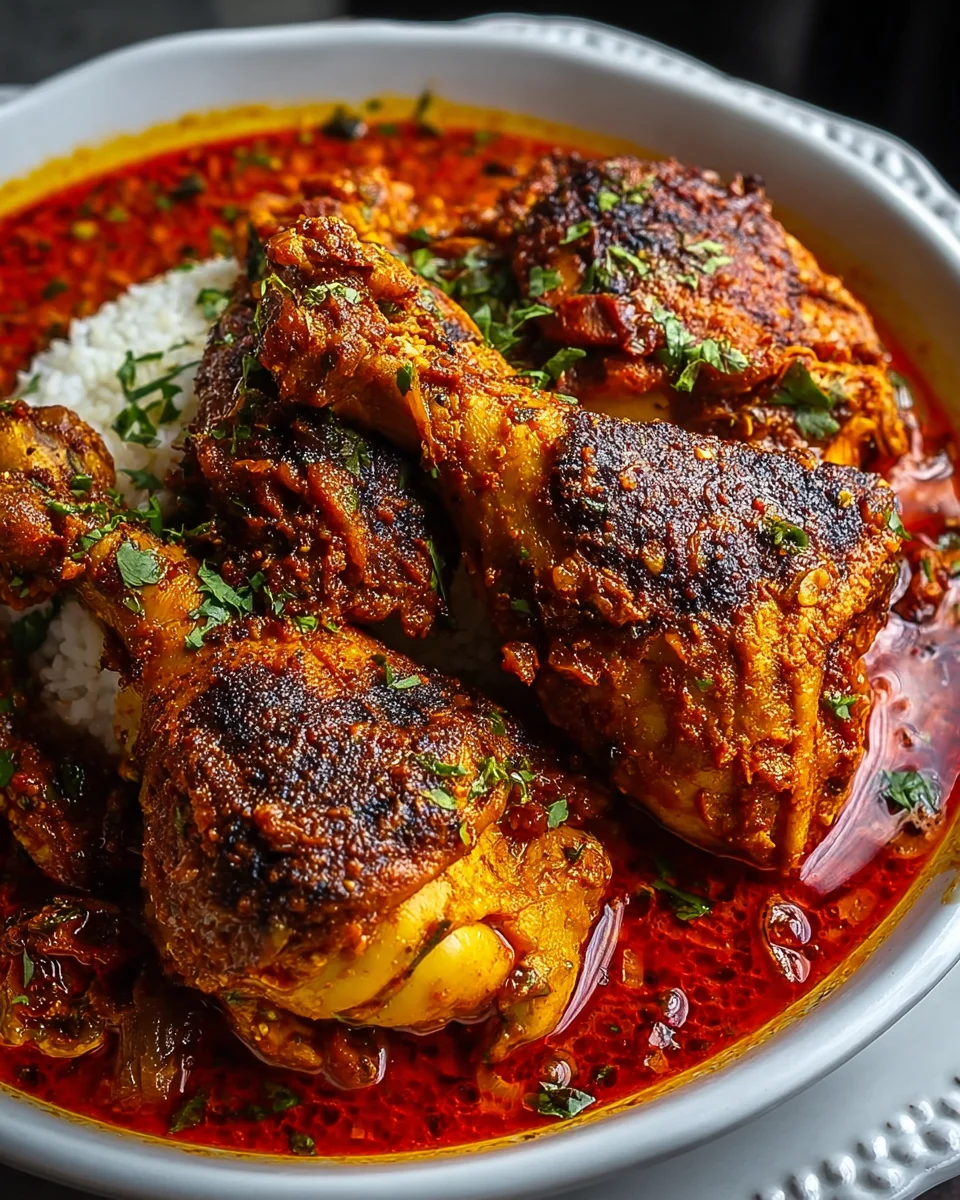
Nigerian Chicken Stew Recipe is a culinary masterpiece that promises to transport your senses straight to the heart of West Africa. Prepare to embark on a flavourful adventure that tantalizes the taste buds and warms the soul with every spoonful!
This vibrant stew is far more than just a meal; it’s a cherished cornerstone of Nigerian gastronomy, a dish deeply embedded in the culture and served with immense pride at family gatherings, festive celebrations, and as a comforting staple for everyday meals. Its rich red hue and inviting aroma are instantly recognizable and universally loved across Nigeria and by its diaspora worldwide.
The irresistible appeal of this stew lies in the harmonious blend of ripe tomatoes, vibrant bell peppers, sweet onions, and a meticulously selected array of aromatic spices that simmer together to create a profoundly deep, complex, and utterly satisfying flavour profile. The chicken, slow-cooked to tender perfection, soaks up all these incredible nuances, resulting in a dish that is both hearty and incredibly comforting. Whether you’re new to West African cuisine or a seasoned enthusiast, mastering this authentic Nigerian Chicken Stew Recipe will undoubtedly elevate your cooking repertoire and bring a taste of home to your table. You’re about to discover why this dish holds such a special place in so many hearts.

Ingredients:
- For the Chicken:
- 1.5 kg (approximately 3.3 lbs) whole chicken, cut into desired pieces (I prefer bone-in for more flavor!)
- 1 large onion, roughly chopped
- 2 cloves garlic, minced
- 1 thumb-sized piece of ginger, peeled and grated
- 1 teaspoon curry powder
- ½ teaspoon dried thyme
- 1-2 seasoning cubes (such as Maggi or Knorr), crushed
- ½ teaspoon salt, or to taste
- Water or chicken stock (about 2-3 cups)
- Vegetable oil, for frying (approximately 3-4 cups)
- For the Pepper Mix:
- 6 large, ripe plum tomatoes (or about 2 cans of peeled whole tomatoes, drained)
- 2 large red bell peppers (Tatashe), stemmed and deseeded
- 1 large yellow bell pepper (optional, for extra color and sweetness)
- 1-3 Scotch bonnet peppers (Ata Rodo), depending on your preferred level of heat (start with one if you’re unsure!)
- ½ large onion, roughly chopped
- 2 cloves garlic, peeled
- 1 thumb-sized piece of ginger, peeled
- For the Stew Base:
- ½ cup vegetable oil (or the oil used from frying the chicken, if desired)
- 1 large onion, thinly sliced or diced
- 6 tablespoons tomato paste (a crucial ingredient for that deep, rich color and flavor!)
- 1-2 seasoning cubes, crushed
- 1 teaspoon curry powder
- ½ teaspoon dried thyme
- 2-3 bay leaves (for an aromatic touch)
- Salt to taste
- Reserved chicken stock from cooking the chicken
Prepping the Chicken
My culinary journey with Nigerian Chicken Stew always begins with the star of the show: the chicken! This is where we lay the foundation for a truly delicious stew, so let’s get it right.
- Clean the Chicken Thoroughly: I usually start by taking my chicken pieces and giving them a really good wash under cold running water. It’s important to remove any lingering debris or impurities. If you prefer to remove the skin or any excess fat, now is the time to do it. Some people blanch their chicken briefly in hot water before seasoning, but I find a good wash is sufficient. Once clean, pat the chicken pieces dry with paper towels; this helps the seasoning adhere better and also ensures a better sear later if you choose to fry it.
- Season the Chicken: Transfer your clean chicken pieces to a large pot. This is where the magic of flavor infusion begins! I add my roughly chopped onion, minced garlic, grated ginger, 1 teaspoon of curry powder, ½ teaspoon of dried thyme, 1-2 crushed seasoning cubes, and ½ teaspoon of salt. I like to get my hands in there and really rub all those beautiful spices into every nook and cranny of the chicken. This isn’t just about coating; it’s about making sure every bite of chicken is bursting with flavor.
- Cook the Chicken: Now, I add just enough water or chicken stock to the pot to barely cover the chicken. We don’t want to drown it, just gently simmer it to tender perfection and create a rich stock. Bring the pot to a boil, then reduce the heat to medium-low, cover, and let it simmer for about 20-25 minutes, or until the chicken is tender but not falling apart. Don’t overcook it at this stage, as it will cook further in the stew. Once cooked, carefully remove the chicken pieces from the pot and set them aside. Make sure to reserve that flavorful chicken stock – it’s liquid gold for our stew!
- Fry the Chicken (Optional but Recommended): For that beautiful golden-brown exterior and extra depth of flavor, I highly recommend frying the chicken. In a large, deep pot or Dutch oven, heat about 3-4 cups of vegetable oil over medium-high heat until shimmering. Carefully add the cooked chicken pieces, making sure not to overcrowd the pot. Fry in batches if necessary. Allow the chicken to fry for about 5-7 minutes per side, or until it’s beautifully golden brown and slightly crispy. This step really elevates the texture and taste of the chicken, adding a lovely contrast to the soft stew. Once fried, remove the chicken and place it on a plate lined with paper towels to drain any excess oil. At this point, I often pour out most of the frying oil, leaving about ½ cup in the pot for the next step, or I simply use fresh oil.
Preparing the Pepper Mix
This is arguably the heart of any good Nigerian stew – the vibrant, aromatic pepper mix. It’s responsible for the rich color and depth of flavor, so attention to detail here truly pays off.
- Wash and Prepare Vegetables: I start by thoroughly washing all my fresh produce. For the tomatoes, bell peppers, and Scotch bonnets, I remove the stems. I deseed the bell peppers, as the seeds can sometimes impart a slightly bitter taste. The Scotch bonnets, however, I often leave whole or just roughly chop them to maintain their potent heat. For the garlic and ginger, a quick peel is all that’s needed. The half onion just needs a rough chop.
- Blend the Pepper Mix: Now, I transfer all these prepared vegetables – tomatoes, red bell peppers, yellow bell pepper (if using), Scotch bonnets, the half onion, garlic, and ginger – into a blender. My goal here is a somewhat coarse blend, not a completely smooth puree. I find that a slightly textured blend gives the stew more body and a more authentic feel. If you blend it too smoothly, it can sometimes lead to a thinner, less robust stew. If your blender struggles, you can add a tiny splash of water, but I try to avoid adding too much liquid at this stage, as we’ll be frying out the water later.
- Boil Down the Pepper Mix (Optional but Recommended): This step is a game-changer for many, myself included, for achieving that perfect stew consistency and deep flavor. I pour my blended pepper mix into a clean pot and place it on the stove over medium-high heat. I let it boil, uncovered, stirring occasionally, until most of the water has evaporated and the mixture has significantly reduced in volume. You’ll notice it thickening and the color deepening. This process can take anywhere from 15-30 minutes, depending on the water content of your vegetables. Why do I do this? It removes excess moisture, which helps prevent a watery stew and significantly cuts down on frying time later. It also concentrates the flavors, making for a more intense and delicious stew. You’ll know it’s ready when it looks like a thick, rich paste.
Frying the Stew Base
This phase is where the magic really happens, transforming simple ingredients into a rich, flavorful base for our Nigerian Chicken Stew. Patience is a virtue here!
- Heat the Oil: I use a large, heavy-bottomed pot or Dutch oven for this step – it helps distribute heat evenly and prevents burning. I pour in about ½ cup of fresh vegetable oil. If you fried your chicken earlier and want to use some of that flavorful oil, you can, but I usually prefer fresh oil for the stew base to control the flavor profile. I heat the oil over medium heat until it’s hot but not smoking.
- Sauté the Onions: Once the oil is hot, I add my thinly sliced or diced large onion. I let it sauté gently, stirring occasionally, until it becomes translucent and fragrant. This usually takes about 5-7 minutes. Don’t rush this step; properly softened onions lay a great foundation of sweetness and aroma.
- Fry the Tomato Paste: This is a critical step for achieving that characteristic deep red color and rich flavor in Nigerian stew. I push the onions to one side of the pot and add the 6 tablespoons of tomato paste directly into the hot oil. I stir it constantly in the oil for about 8-10 minutes, or until it darkens from a bright red to a deeper, almost brick-red hue, and loses its raw, metallic taste. You’ll notice the oil separating from the paste. This step develops a huge amount of umami and color, so don’t skip it or cut it short! It truly makes all the difference.
- Introduce the Pepper Mix: Once the tomato paste has been properly fried, I carefully add the boiled-down (or raw, if you skipped boiling) blended pepper mix to the pot. I stir it vigorously, making sure it combines thoroughly with the fried tomato paste and onions. At this point, the aroma in my kitchen is absolutely intoxicating!
- Fry the Pepper Mix to Perfection: This is perhaps the most important and time-consuming part of making the stew base. I reduce the heat to medium-low, cover the pot partially (to prevent splattering), and let the pepper mix fry gently. I make sure to stir frequently, about every 5-7 minutes, to prevent it from sticking to the bottom and burning. You’ll notice the color gradually deepening to a beautiful, vibrant red. The key indicator that it’s ready is when the oil separates from the pepper mix and floats to the top, forming a clear layer. This process can take anywhere from 30 minutes to an hour, or even longer, depending on how much water was in your pepper mix initially. Patience here is paramount; properly fried stew base is the secret to a rich, non-acidic, and truly delicious Nigerian stew. When it’s done, it should look thick, glossy, and intensely red.
Combining and Simmering the Stew
With our rich, fragrant stew base ready, it’s time to bring all the elements together for the final symphony of flavors.
- Add Remaining Seasonings: Once my pepper mix has fried to perfection and the oil has separated, I stir in the remaining 1-2 crushed seasoning cubes, 1 teaspoon of curry powder, ½ teaspoon of dried thyme, and the 2-3 bay leaves. These spices will infuse the stew with their aromatic essences as it simmers. I give it a good stir to ensure everything is well combined and those beautiful aromas start to waft up.
- Pour in the Chicken Stock: Now, I slowly pour in the reserved chicken stock that we saved from cooking our chicken. This stock is packed with flavor and will thin out the stew base to the perfect consistency while adding incredible depth. I start with about 2 cups and add more if needed, depending on how thick I want my stew. I stir well, ensuring there are no lumps and the stew base is fully incorporated into the liquid.
- Introduce the Chicken: Carefully, I add the fried chicken pieces back into the pot with the stew. I gently nudge them down so they are mostly submerged in the rich sauce. This allows them to absorb all the wonderful flavors of the stew as it simmers. If you didn’t fry your chicken, you would add your boiled chicken pieces at this point.
- Simmer to Perfection: I bring the stew to a gentle boil, then immediately reduce the heat to low. I cover the pot and let the stew simmer for another 15-20 minutes. This simmering stage is crucial because it allows all the flavors to meld beautifully. The chicken absorbs the sauce, and the stew thickens slightly to a luxurious consistency. Remember to stir occasionally to prevent sticking and ensure even cooking. The bay leaves will release their subtle, aromatic notes, contributing to the overall complexity of the stew.
- Taste and Adjust Seasoning: After about 15 minutes of simmering, I remove the lid and give the stew a good stir. This is the moment for a critical taste test! I check for salt, and if needed, I add a little more, tasting as I go until it’s just right. Sometimes, I might add another pinch of curry or thyme if I feel it needs a bit more oomph. I always aim for a balanced flavor profile – rich, savory, with a hint of warmth from the peppers and spices.
Finishing Touches and Serving
The moment of truth has arrived! Your Nigerian Chicken Stew is almost ready to grace your table, filling your home with its incredible aroma.
- Final Check: Before turning off the heat, I take one last look at my stew. I want to see a beautiful, glossy red color, with a layer of oil glistening on top – that’s a sign of a well-fried stew. The chicken should be tender and coated generously in the sauce, and the stew itself should be thick enough to cling to a spoon, not watery. If it’s too thick, I might add a splash more chicken stock or water and let it simmer for another 5 minutes. If it’s a little too thin, I uncover it and let it simmer gently for a few more minutes to reduce.
- Remove Bay Leaves: For presentation and to prevent them from being accidentally eaten, I carefully fish out the bay leaves from the stew. Their job of infusing flavor is done.
- Serve with Pride: Now, for the best part – serving! Nigerian Chicken Stew is incredibly versatile. I love to serve it piping hot with a generous helping of fluffy white rice, but it’s equally delightful with boiled yam, fried plantain (dodo), pounded yam, or even just some crusty bread for dipping. There’s nothing quite like scooping up that rich, spicy sauce with your favorite accompaniment.
- Storage Tips: If you’re lucky enough to have leftovers (which is rare in my house!), this stew tastes even better the next day as the flavors continue to deepen. I store any remaining stew in an airtight container in the refrigerator for up to 3-4 days. It also freezes beautifully for up to 3 months, making it perfect for meal prep. Just thaw and reheat gently on the stovetop or in the microwave.
And there you have it – a truly authentic and incredibly flavorful Nigerian Chicken Stew Recipe, made with love and patience. Enjoy every delicious bite!
Conclusion:
If there’s one dish I could urge you to try from the depths of my culinary heart, it would be the incredible recipe we’ve just explored. This isn’t just another meal; it’s an experience, a vibrant celebration of flavors that truly showcases the warmth and richness of Nigerian cuisine. From the moment the aroma of simmering tomatoes, peppers, and tender chicken fills your kitchen, you’ll understand why this dish holds such a special place for so many. The careful balance of sweetness from bell peppers, the subtle heat from scotch bonnets, and the robust depth of perfectly cooked chicken creates a symphony for your taste buds that is genuinely unforgettable. It’s a versatile masterpiece, comforting on a cool evening, yet lively enough for a festive gathering. I truly believe that mastering this recipe will not only expand your cooking repertoire but also introduce you to a world of delicious possibilities.
One of the greatest joys of preparing this stew is its incredible adaptability when it comes to serving. While it stands gloriously on its own, here are a few ways I absolutely love to enjoy it. My personal favorite, and arguably the most traditional pairing, is with perfectly cooked white rice. The fluffy grains act as an ideal canvas, soaking up every drop of that rich, flavorful sauce. Beyond rice, consider serving your magnificent stew with boiled yam or plantain; the slight sweetness of the plantain beautifully complements the savory notes of the stew, creating a truly harmonious meal. For those who enjoy a heartier option, a side of soft eba or pounded yam offers a more traditional West African experience, allowing you to scoop up the stew with delightful ease. And for a simpler, yet equally satisfying approach, don’t hesitate to serve it alongside some crusty bread – it’s perfect for dipping and ensuring not a single drop of that incredible sauce goes to waste!
But the journey doesn’t have to end with these suggestions. This recipe is wonderfully open to your own creative flair. Fancy a vegetarian twist? Swap out the chicken for hearty mushrooms, robust eggplants, or even firm tofu, adjusting cooking times accordingly. If you prefer a milder heat, simply reduce the amount of scotch bonnet peppers, or if you’re a chili enthusiast like me, feel free to add an extra one for an exhilarating kick! You could also introduce other vegetables like carrots, green beans, or potatoes during the simmering stage to add more texture and nutritional value, transforming it into an even more comprehensive one-pot wonder. The beauty of this Nigerian Chicken Stew Recipe is its flexibility, allowing you to tailor it perfectly to your family’s preferences and whatever fresh ingredients you have on hand.
I genuinely hope that you feel inspired to dive into your kitchen and give this extraordinary recipe a try. Don’t be intimidated; the process is straightforward, and the rewards are immense. The sense of accomplishment you’ll feel as you present this vibrant dish to your loved ones is truly priceless. Imagine the smiles, the satisfied murmurs, and the requests for second servings – that’s the magic of home cooking. I urge you to embrace the challenge and savor every step of creating this culinary gem.
Once you’ve experienced the sheer deliciousness of this stew, I would absolutely love to hear about it! Your experiences, your tips, your variations, and even your funny kitchen anecdotes are what make our cooking community so special. Please don’t hesitate to share your thoughts and photos in the comments section below or on your favorite social media platform. Did you discover a new favorite serving suggestion? Did you add a unique ingredient that elevated it even further? Let me know! Your feedback not only brightens my day but also inspires others to embark on their own cooking adventures. There’s nothing quite like sharing the joy of a truly fantastic meal, and this Nigerian Chicken Stew Recipe is certainly one to share. Happy cooking, my friends!
Authentic Nigerian Chicken Stew
This vibrant Nigerian Chicken Stew is a culinary masterpiece, offering a rich, flavourful adventure that tantalizes taste buds and warms the soul. A cherished cornerstone of Nigerian gastronomy, perfect for family gatherings and everyday meals.
Ingredients
Instructions
Important Information
Nutrition Facts (Per Serving)
It is important to consider this information as approximate and not to use it as definitive health advice.
Allergy Information
Please check ingredients for potential allergens and consult a health professional if in doubt.
Leave a Comment