Korean Ramen With Seafood And Chili Oil
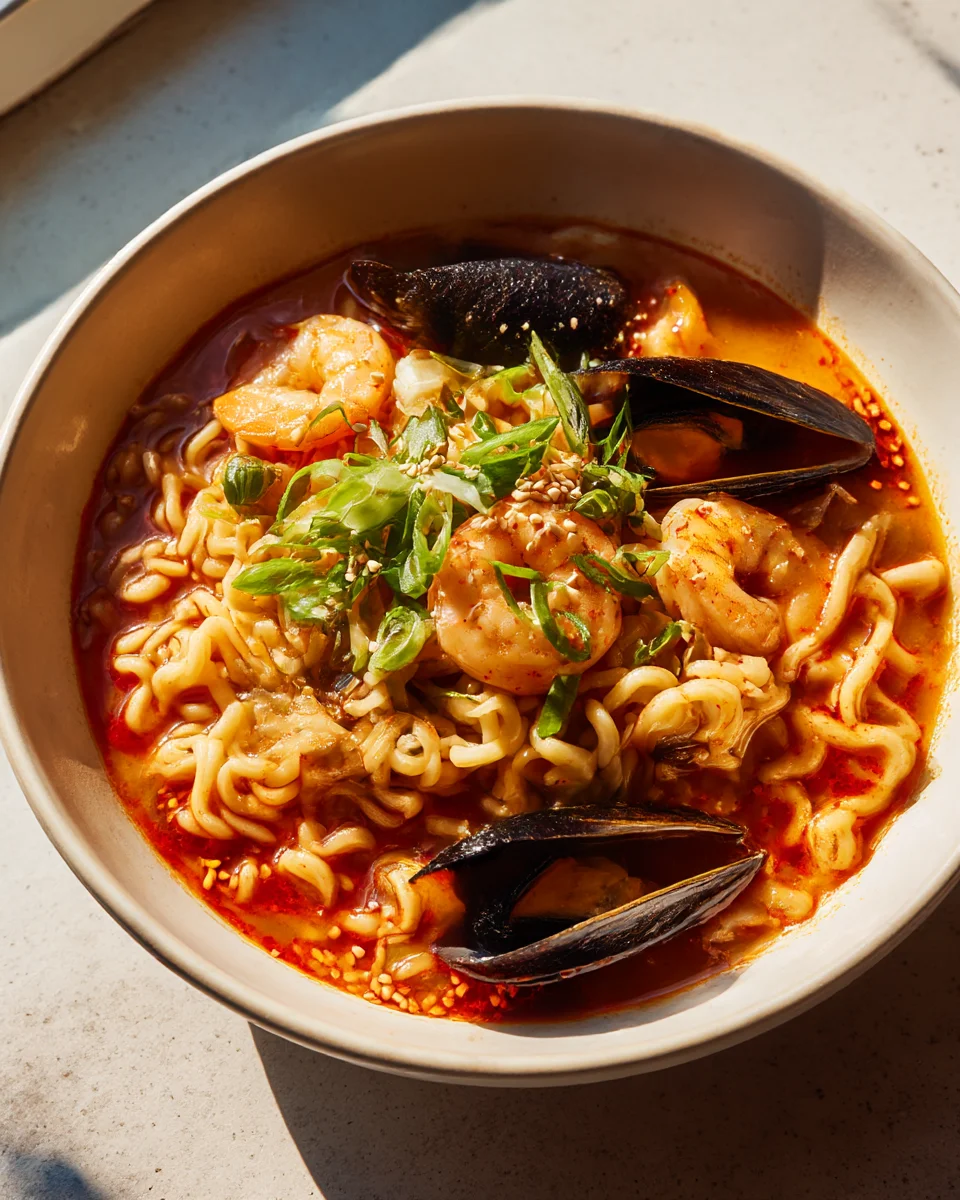
Oh, prepare yourselves for an absolute flavor explosion! When I tell you that Korean Ramen With Seafood And Chili Oil is a dish you absolutely need in your life, I’m not exaggerating. This isn’t just your average ramen – we’re talking about an incredible culinary journey that elevates humble instant noodles into a gourmet experience. What makes this recipe truly special is the harmonious blend of fresh, succulent seafood, a deeply savory and fiery broth, and that glorious finishing drizzle of aromatic chili oil that brings everything together with a vibrant kick.
You’re going to fall head over heels for this dish because it perfectly marries comfort food with an adventurous spirit. Imagine slurping up perfectly chewy ramen noodles bathed in a rich, spicy, and umami-packed broth, each spoonful loaded with tender shrimp, plump mussels, and calamari. It’s incredibly satisfying, wonderfully warming, and surprisingly easy to achieve in your own kitchen. Whether you’re a seafood lover, a fan of Korean flavors, or just looking to spice things up on a chilly evening, this ramen delivers on all fronts – promising a bowlful of pure, unadulterated deliciousness that will keep you coming back for more.
In essence, this dish is a vibrant, hearty bowl of Korean-style ramen, packed with a medley of fresh seafood and simmered in a robust, chili-infused broth. It’s garnished simply, often with fresh green onions or a sprinkle of sesame seeds, allowing the incredible flavors of the seafood and spicy broth, enhanced by that luscious chili oil, to truly shine. Get ready to dive in!

Ingredient Notes
Crafting the perfect bowl of Korean Ramen With Seafood And Chili Oil is all about selecting the right ingredients that work in harmony to deliver a truly unforgettable experience. I find that a thoughtful combination of fresh seafood, vibrant vegetables, and, of course, that essential fiery kick makes all the difference.
- Korean Instant Ramen: This is the undeniable star of our dish! I always recommend choosing a spicy variety like Shin Ramyun, Neoguri (which already has a seafood base, making it a fantastic choice), or Jin Ramen. The specific ramen packet dictates the foundational flavor of your broth, so pick one you genuinely enjoy. Don’t forget to use both the seasoning packet and the dried vegetable flakes it comes with!
- Assorted Seafood: Here’s where the “seafood” truly shines! I love to use a mix for variety in texture and taste. My go-to choices include plump, peeled and deveined shrimp, sweet mussels (scrubbed clean and de-bearded), and tender squid (cleaned and cut into bite-sized rings). You could also add some small clams or even imitation crab meat for extra flavor. Fresh seafood is ideal, but a good quality frozen seafood mix, thawed properly beforehand, works wonderfully and is super convenient.
- Chili Oil: The “chili oil” component of our recipe is crucial for that distinctive vibrant red hue, a layer of aromatic heat, and a beautiful glossy finish. You can easily find excellent store-bought Korean chili oil, often labeled ‘gochu gireum.’ Alternatively, if you’re feeling adventurous, making your own chili oil allows for customizability in terms of spice level and aroma. A generous drizzle right before serving truly elevates the dish.
- Aromatics & Vegetables: These add freshness, texture, and additional layers of flavor.
- Garlic: Minced, it forms the aromatic base of our broth.
- Onion: Sliced thin, it adds a subtle sweetness.
- Green Onions: Both for cooking and as a fresh garnish. They provide a lovely mild oniony bite.
- Mushrooms: Shiitake, enoki, or even simple button mushrooms work well, adding an earthy umami.
- Napa Cabbage: Sliced, it cooks down beautifully, lending a gentle sweetness and satisfying crunch.
- Zucchini or Bok Choy: Other great additions for more veggie goodness.
- Egg (Optional but Recommended): A soft-boiled, poached, or even fried egg is a classic ramen topping. A runny yolk adds a creamy richness that beautifully complements the spicy broth.
- Gochujang (Korean Chili Paste) & Gochugaru (Korean Chili Flakes): For those who love an extra kick and a deeper, more complex Korean flavor profile, these are fantastic additions. A small spoonful of gochujang can thicken the broth slightly and add fermented chili depth, while gochugaru offers a clean, bright heat.
- Broth Base: While the ramen packet provides a good foundation, I often use a mix of water and a splash of low-sodium beef broth. The beef broth can enhance the richness and umami of the soup, complementing the seafood flavors without overpowering them.
- Non-Alcoholic Mirin Substitute: A tiny dash (think a teaspoon) of non-alcoholic mirin substitute (e.g., rice vinegar mixed with a pinch of sugar) can add a touch of subtle sweetness and balance the savory and spicy notes in the broth, rounding out the flavors beautifully.
Step-by-Step Instructions
Get ready to dive into making this incredible Korean Ramen With Seafood And Chili Oil! It’s a surprisingly quick and straightforward process, perfect for a satisfying meal any day of the week. Here’s how I bring it all together:
- Prepare Your Ingredients: Before you even turn on the stove, it’s best to have everything prepped. I start by thoroughly cleaning my seafood—peeling and deveining the shrimp, scrubbing the mussels, and cleaning and cutting the squid into rings. Then, I chop all my vegetables: mince the garlic, thinly slice the onion and Napa cabbage, chop the green onions (keeping some separate for garnish), and slice any mushrooms. This mise en place makes the cooking process seamless and enjoyable.
- Sauté the Aromatics: Grab a medium-sized pot or a deep skillet. Heat a tablespoon of neutral cooking oil (like vegetable or canola oil) over medium heat. Once it’s shimmering, add your minced garlic and sliced onion. I sauté these for about 2-3 minutes, stirring occasionally, until they become fragrant and the onion starts to soften and turn translucent. This step builds the foundational aroma for our ramen.
- Build the Flavor Base (Optional but Recommended): If I’m craving an extra depth of Korean flavor and a bit more heat, this is when I’ll add a small teaspoon of gochujang and a half teaspoon of gochugaru to the pot with the sautéed aromatics. I stir them for about 30 seconds, just long enough to “bloom” the spices and release their full flavor, being careful not to burn them.
- Add Liquids and Ramen Seasoning: Now, it’s time for the liquid! Pour in about 2-3 cups of water or a combination of water and beef broth (the amount depends on your ramen packet’s instructions and how soupy you like it). Add the seasoning packet and the dried vegetable flakes that came with your instant ramen. If using, add a tiny dash of non-alcoholic mirin substitute here. Bring the liquid to a rolling boil. Give it a good stir to ensure all the seasoning dissolves evenly.
- Cook Noodles and Heartier Vegetables: Once the broth is vigorously boiling, carefully add the instant ramen noodles. Break them up a bit if they don’t fit easily. At this stage, I also add any tougher vegetables like the sliced Napa cabbage. I let everything cook for about 2 minutes, stirring gently to separate the noodle strands. You want the noodles to start softening but still be a bit firm, as they’ll continue to cook.
- Introduce Seafood and Quick-Cooking Vegetables: This is where the magic happens! Add all your prepared seafood—shrimp, mussels, squid—along with any quicker-cooking vegetables like mushrooms and some of the chopped green onions. I stir everything gently and let it cook for another 2-3 minutes. It’s crucial not to overcook the seafood; shrimp will turn pink and opaque, mussels will open, and squid will turn opaque and firm quickly. Overcooked seafood becomes rubbery, and we definitely want to avoid that!
- Finish and Serve Immediately: As soon as the seafood is perfectly cooked and the noodles are al dente, remove the pot from the heat. Carefully ladle the Korean Ramen With Seafood And Chili Oil into individual serving bowls. This is my favorite part: I drizzle each bowl generously with chili oil, scatter the remaining fresh chopped green onions over the top, and if desired, gently place a perfectly soft-boiled or poached egg on top. Serve it immediately while everything is piping hot!
Tips & Suggestions
To truly master your Korean Ramen With Seafood And Chili Oil, I’ve gathered some of my favorite tips and suggestions that can elevate your experience from good to absolutely amazing. These insights come from countless bowls I’ve enjoyed and tinkered with over the years!
- Don’t Overcook the Seafood or Noodles: This is perhaps the most critical tip! Seafood, especially shrimp and squid, cooks incredibly quickly. Overcooking will make it rubbery and tough, which completely detracts from the dish. Similarly, instant ramen noodles can go from perfectly al dente to mushy in a blink. Keep a close eye on them; the moment they are tender but still have a slight chew, remove the pot from the heat.
- Customize Your Heat Level: The beauty of this dish is its versatility.
- For More Heat: Be generous with your chili oil, add extra gochugaru (Korean chili flakes), or even a sliced fresh red chili. I sometimes like to add a pinch of black pepper for a different kind of warmth.
- For Milder Heat: Use less of the ramen seasoning packet, reduce the amount of gochujang and gochugaru, and go easy on the chili oil. You can also offset some heat with a touch more non-alcoholic mirin substitute or a splash of milk/cream (though this changes the traditional profile).
- Achieve the Perfect Egg: A soft-boiled egg with a jammy or runny yolk is my absolute favorite topping. You can either cook it separately (6-7 minutes for soft-boiled, then peel and add) or crack an egg directly into the simmering broth about 3-4 minutes before the ramen is done. Let it poach gently in the broth, basting it occasionally with the hot liquid until the whites are set and the yolk is still runny.
- Explore Additional Toppings: Don’t limit yourself to just green onions!
- Kimchi: A spoonful of well-fermented kimchi adds a fantastic tangy, spicy, and umami crunch.
- Cheese: A slice of American cheese or a sprinkle of shredded mozzarella (yes, seriously!) melting into the hot broth can add an unexpected creaminess and richness, a popular hack in Korea.
- Tofu: Cubed silken or firm tofu can add extra protein and a lovely texture.
- Seaweed: Crumbled roasted seaweed snacks (gim) provide a salty, oceanic crunch.
- Enhance Broth Depth: While the ramen seasoning is good, you can make it even better. Using low-sodium beef broth instead of just water adds a fantastic layer of savory depth. A small piece of dried kelp (dashima) simmered in the broth for the first few minutes can also infuse it with more umami.
- Serving Suggestions: While this ramen is a complete meal on its own, I often enjoy it with a few simple banchan (Korean side dishes) like quick-pickled radishes or a small bowl of fresh kimchi on the side. A simple cold beer or a refreshing glass of iced tea makes a great accompaniment.
- Don’t Be Afraid to Experiment: The beauty of home cooking is personalizing it. Feel free to swap out vegetables based on what’s in season or what you have on hand. Don’t like mussels? Skip them! Love extra garlic? Go for it! Make this dish truly your own.
Storage
While Korean Ramen With Seafood And Chili Oil is undeniably at its absolute best when served immediately, I understand that sometimes you might have leftovers or want to plan ahead. However, I must emphasize that this is one of those dishes that really suffers in quality when stored and reheated, particularly due to the delicate nature of instant noodles and seafood.
- Best Consumed Fresh: My strongest recommendation is to enjoy your Korean Ramen With Seafood And Chili Oil as soon as it’s cooked. The noodles will be perfectly al dente, the seafood will be tender and juicy, and the broth will be piping hot and vibrantly flavored. Instant noodles, by their nature, tend to absorb a lot of liquid and can become soggy and bloated very quickly upon sitting, especially in a hot broth.
- Short-Term Refrigeration (Not Ideal): If you absolutely must store leftovers, allow the ramen to cool down to room temperature as quickly as possible (without leaving it out for more than an hour). Transfer it to an airtight container and store it in the refrigerator for no more than 1 day. Beyond this, the quality will significantly diminish.
- Reheating Challenges:
- Noodle Texture: Upon reheating, the noodles will almost certainly be much softer and potentially mushy. They will have absorbed a lot of the broth, so the soup might also be considerably thicker than when fresh.
- Seafood Texture: Reheating seafood can be tricky. It often leads to a rubbery texture, especially for shrimp and squid, and mussels might become tough. The delicate flavors of fresh seafood also tend to dissipate.
- Optimal Reheating Strategy (if necessary): If you do have leftovers and need to reheat:
- Gently reheat the ramen on the stovetop over low to medium heat. Avoid high heat, which can make the seafood even tougher.
- You might need to add a splash of water or beef broth to loosen the noodles and thin out the broth, as it will have thickened significantly.
- Stir frequently and heat just until warmed through. Do not boil vigorously.
- Be prepared for a noticeable change in texture compared to the fresh dish.
- Preparing Ahead (Partial): If you want to save a little time, you can prep some components in advance:
- Chop all your vegetables and store them in separate airtight containers in the fridge.
- Clean and prepare your seafood, storing it in an airtight container with ice, or simply ensure it’s thawed and ready to go.
- Make your chili oil in advance if you’re doing homemade.
However, I still recommend cooking the broth, noodles, and seafood fresh right before you plan to eat for the best possible result.
Final Thoughts
There’s something truly magical about a dish that simultaneously comforts and excites your palate, and I believe Korean Ramen With Seafood And Chili Oil does exactly that. From the moment you take that first slurp, you’re greeted with a vibrant dance of flavors – the rich, savory depth of the Korean ramen broth, the fresh, oceanic sweetness of the various seafood elements, and then, the captivating warmth and aromatic kick from the chili oil. It’s not just a meal; it’s an experience that truly awakens your senses.
I genuinely hope you’ll give this recipe a try. It’s a wonderful way to bring a taste of Korea’s dynamic culinary scene into your own kitchen, creating a bowl that is both incredibly satisfying and wonderfully invigorating. Imagine a cozy evening, a steaming bowl in hand, savoring every single nuanced bite. Trust me, once you experience the harmonious blend of spice, umami, and freshness in Korean Ramen With Seafood And Chili Oil, you’ll find yourself craving its unique perfection again and again. Enjoy every slurp!
Spicy Korean Ramen: Seafood & Chili Oil Flavor Explosion!
Dive into a bowl of Spicy Korean Ramen with Seafood and Chili Oil, where fresh seafood meets a fiery broth for an unforgettable culinary experience. This dish perfectly balances comfort and adventure, making it a must-try for any ramen lover.
- Prep Time: 15 mins
- Cook Time: 15 mins
- Total Time: 30 minutes
- Yield: 4 servings
- Category: Dinner
- Method: Cooking
- Cuisine: Korean
Ingredients
- Korean Instant Ramen (spicy variety like Shin Ramyun, Neoguri, or Jin Ramen)
- Assorted Seafood (plump peeled and deveined shrimp, sweet mussels, tender squid cut into rings, small clams or imitation crab meat)
- Chili Oil (store-bought or homemade)
- Garlic (minced)
- Onion (sliced thin)
- Green Onions (chopped, some reserved for garnish)
- Mushrooms (shiitake, enoki, or button mushrooms)
- Napa Cabbage (sliced)
- Zucchini or Bok Choy (sliced)
- Egg (soft-boiled, poached, or fried, optional but recommended)
- Gochujang (Korean Chili Paste)
- Gochugaru (Korean Chili Flakes)
- Broth Base (water and low-sodium beef broth)
- Non-Alcoholic Mirin Substitute (rice vinegar mixed with a pinch of sugar)
Instructions
- Prepare Your Ingredients: Clean the seafood, peel and devein the shrimp, scrub the mussels, and clean and cut the squid into rings. Chop the garlic, slice the onion and Napa cabbage, chop the green onions, and slice the mushrooms.
- Sauté the Aromatics: Heat a tablespoon of neutral cooking oil in a medium-sized pot over medium heat. Add minced garlic and sliced onion, sauté for 2-3 minutes until fragrant and translucent.
- Build the Flavor Base (Optional but Recommended): Add a teaspoon of gochujang and half a teaspoon of gochugaru to the pot with the sautéed aromatics and stir for about 30 seconds.
- Add Liquids and Ramen Seasoning: Pour in 2-3 cups of water or a combination of water and beef broth. Add the seasoning packet and dried vegetable flakes from the ramen. Bring to a rolling boil.
- Cook Noodles and Heartier Vegetables: Add the instant ramen noodles and sliced Napa cabbage to the boiling broth. Cook for about 2 minutes, stirring gently.
- Introduce Seafood and Quick-Cooking Vegetables: Add the prepared seafood, mushrooms, and some chopped green onions. Cook for another 2-3 minutes until the seafood is cooked through.
- Finish and Serve Immediately: Remove from heat and ladle the ramen into bowls. Drizzle with chili oil, garnish with green onions, and top with a soft-boiled or poached egg if desired. Serve hot.
Nutrition
- Serving Size: 1 bowl
- Calories: 450
- Sugar: 5 g
- Sodium: 1200 mg
- Fat: 15 g
- Saturated Fat: 3 g
- Unsaturated Fat: 10 g
- Trans Fat: 0 g
- Carbohydrates: 60 g
- Fiber: 3 g
- Protein: 20 g
- Cholesterol: 150 mg
Keywords: Don't overcook the seafood or noodles to maintain their texture. Customize the heat level by adjusting the amount of chili oil and gochugaru used. Feel free to experiment with additional toppings like kimchi, cheese, or tofu.



Leave a Comment